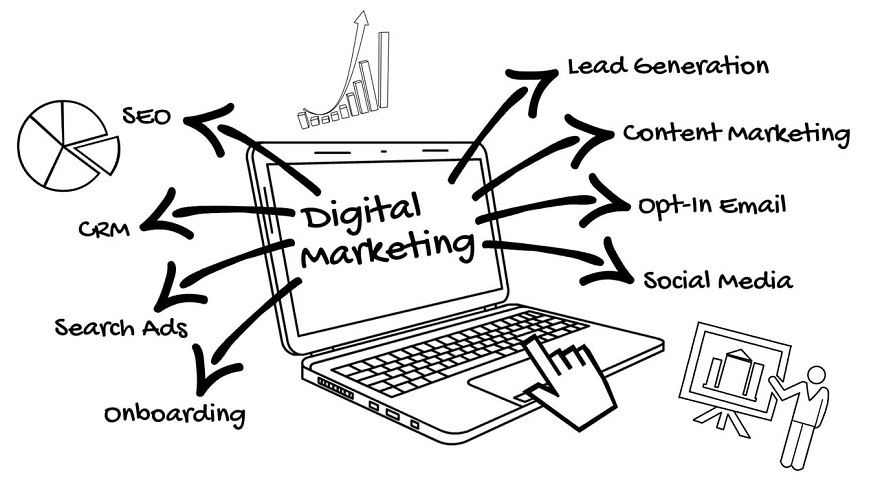
What Does Digital Marketing Include?
Below are the main components that make up a complete digital marketing strategy:
1. Search Engine Optimization (SEO)
SEO focuses on improving your website’s visibility in search engines like Google.
When people search for your services, SEO helps your site appear higher in results — bringing in organic (unpaid) traffic.
Includes:
- On-page SEO (content optimization, meta tags)
- Off-page SEO (link building, guest posts)
- Technical SEO (site speed, mobile optimization)
- Local SEO (ranking for nearby searches)
2. Search Engine Marketing (SEM)
SEM refers to paid marketing efforts on search engines — also called PPC (Pay-Per-Click) advertising.
You bid on keywords, and your ads appear above organic results when people search for those terms.
Platforms:
- Google Ads
- Microsoft Advertising (Bing Ads)
Benefits:
- Instant visibility
- Targeted reach
- Easy performance tracking
3. Social Media Marketing (SMM)
SMM involves promoting your brand, content, and products through social media platforms.
It helps in building brand awareness, engagement, and lead generation.
Popular Platforms:
- Facebook
- Instagram
- LinkedIn
- YouTube
- X (Twitter)
- Pinterest
Includes:
- Organic posting
- Paid social ads
- Influencer collaborations
- Community engagement
4. Content Marketing
Content marketing focuses on creating and distributing valuable, informative, and engaging content that attracts your audience and builds trust.
Types of content include:
- Blogs and articles
- Videos
- Infographics
- Ebooks & whitepapers
- Case studies
Goal:
Drive organic traffic, nurture leads, and position your brand as an expert.
5. Email Marketing
Still one of the highest ROI channels, email marketing involves sending targeted messages to potential and existing customers.
Includes:
- Newsletters
- Promotional campaigns
- Automated follow-up sequences
- Drip campaigns
Benefits:
- Builds relationships
- Encourages repeat sales
- Supports lead nurturing
6. Affiliate Marketing
In affiliate marketing, you partner with third-party publishers (affiliates) who promote your products in exchange for a commission per sale or lead.
Example:
Amazon’s Affiliate Program — where influencers earn a percentage by referring customers.
7. Influencer Marketing
Collaborating with influencers who have strong online followings helps businesses reach specific audiences authentically.
Includes:
- Sponsored posts
- Product reviews
- Brand collaborations
- Event promotions
8. Video Marketing
Video is one of the most engaging forms of content.
Platforms like YouTube, Instagram Reels, and TikTok allow brands to connect visually with audiences.
Examples:
- Product demos
- Tutorials
- Explainer videos
- Brand storytelling
9. Mobile Marketing
Mobile marketing targets users through smartphones and tablets.
Includes:
- SMS marketing
- Push notifications
- In-app advertising
- Mobile-optimized websites
Since most people access the internet on mobile, this is an essential part of any digital strategy.
10. Online Reputation Management (ORM)
ORM involves monitoring and improving how your brand is perceived online.
Includes:
- Managing Google Reviews and feedback
- Handling negative comments
- Promoting positive testimonials
- Building brand trust
11. Marketing Automation
Automation tools help businesses streamline repetitive marketing tasks.
Includes:
- Auto email campaigns
- Chatbots and AI assistants
- Lead scoring systems
- CRM integration
Popular Tools: HubSpot, Mailchimp, ActiveCampaign, Zoho CRM
12. Performance Marketing
Performance marketing focuses on measurable results — you only pay when users take specific actions (like clicks, leads, or sales).
Includes:
- Google Ads
- Facebook Ads
- Affiliate and display ads
- Retargeting campaigns
This is ideal for small and medium businesses looking for ROI-driven marketing.